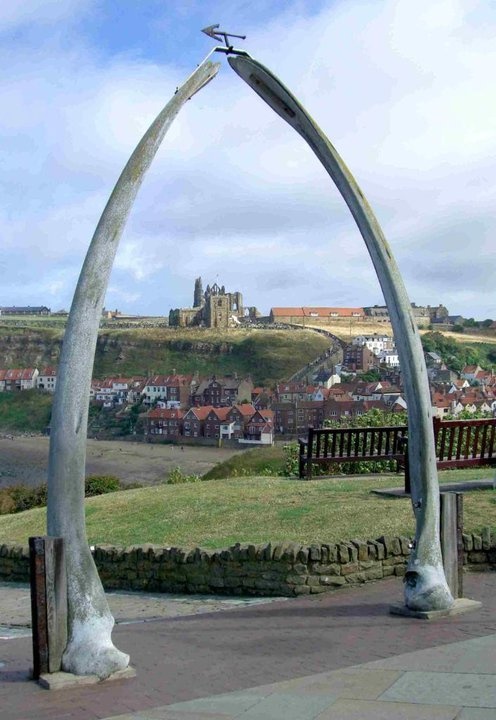
Whitby, a picturesque seaside town in North Yorkshire, England, is known for its stunning coastal views and rich maritime history. One of the most iconic landmarks in Whitby is the Whale Bone Arch, a striking structure that stands as a tribute to the town's whaling past.
The Whale Bone Arch in Whitby is made up of two large whale jawbones that are set into stone pillars. The arch was originally erected in 1853 to commemorate the town's long history of whaling, which dates back to the 18th century. While whaling has long since ceased in Whitby, the arch remains as a reminder of this important part of the town's heritage.
Visitors to Whitby often make a point of visiting the Whale Bone Arch, not only for its historical significance but also for its stunning location overlooking the harbor and North Sea. The arch provides a perfect backdrop for photos and offers panoramic views of the surrounding coastline.
In addition to admiring the Whale Bone Arch itself, visitors can also explore other attractions in Whitby, such as:
- Whitby Abbey: A dramatic ruined abbey perched on a cliff overlooking the town.
- Captain Cook Memorial Museum: Dedicated to explorer Captain James Cook, who began his seafaring career in Whitby.
- St Mary's Church: An ancient church with connections to Bram Stoker's Dracula.
Whether you're interested in history, photography, or simply enjoying beautiful coastal scenery, a visit to the Whale Bone Arch in Whitby is sure to be a memorable experience. Don't forget your camera – you'll want to capture this iconic landmark against the backdrop of one of England's most charming seaside towns.