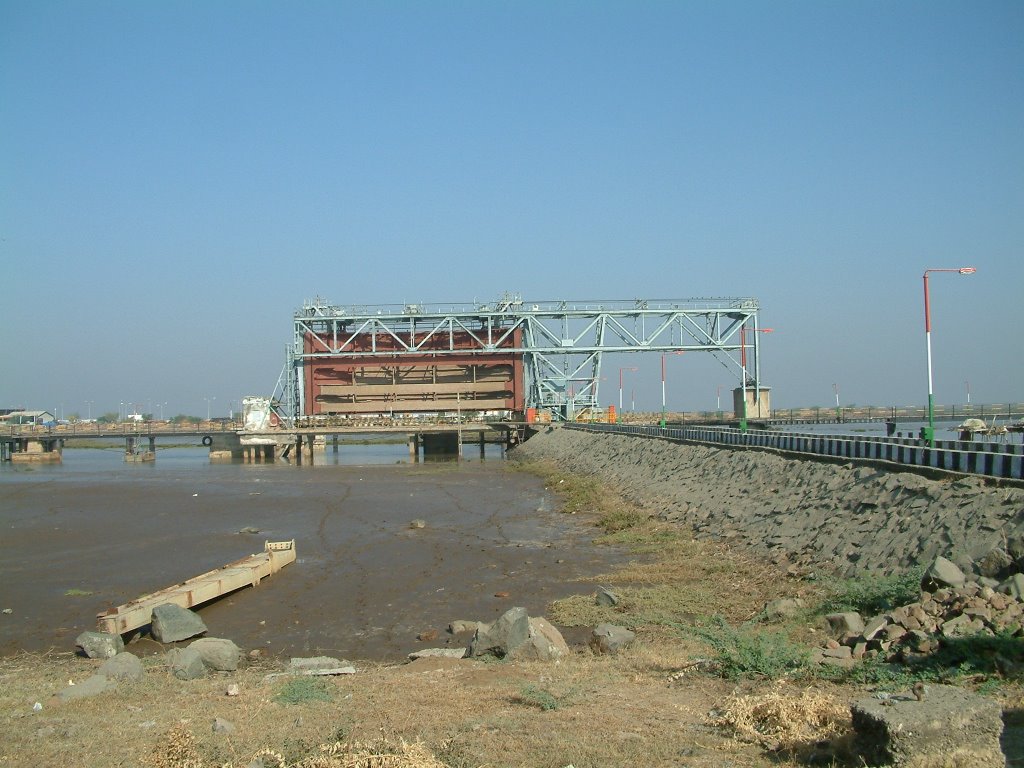
Bhavnagar, a coastal city in the western state of Gujarat, India, is home to one of the most impressive engineering marvels - the Water Lock Gate. This gate serves as a crucial component of the city's infrastructure, helping to regulate water levels and prevent flooding in low-lying areas.
The Water Lock Gate in Bhavnagar is a hydraulic structure that controls the flow of water between two bodies of water, such as a river and a canal. It consists of large gates that can be opened or closed to allow or restrict the passage of water. The gate operates on the principle of buoyancy, with its weight balanced by the force exerted by the water on either side.
One of the key functions of the Water Lock Gate is flood control. During periods of heavy rainfall or high tides, the gate can be closed to prevent excess water from entering low-lying areas and causing damage. This helps protect homes, businesses, and infrastructure from potential flooding disasters.
Additionally, the Water Lock Gate plays a vital role in regulating water levels for irrigation purposes. By controlling the flow of water between different channels and reservoirs, farmers are able to efficiently manage their crops and ensure optimal growth conditions.
The construction and maintenance of the Water Lock Gate require specialized engineering expertise and regular inspections to ensure proper functioning. The gate must be carefully monitored for signs of wear and tear, corrosion, or mechanical issues that could compromise its effectiveness.
In conclusion, the Water Lock Gate in Bhavnagar is an essential piece of infrastructure that helps protect against flooding and facilitates efficient irrigation practices. Its innovative design and functionality make it a standout feature in this bustling Indian city.