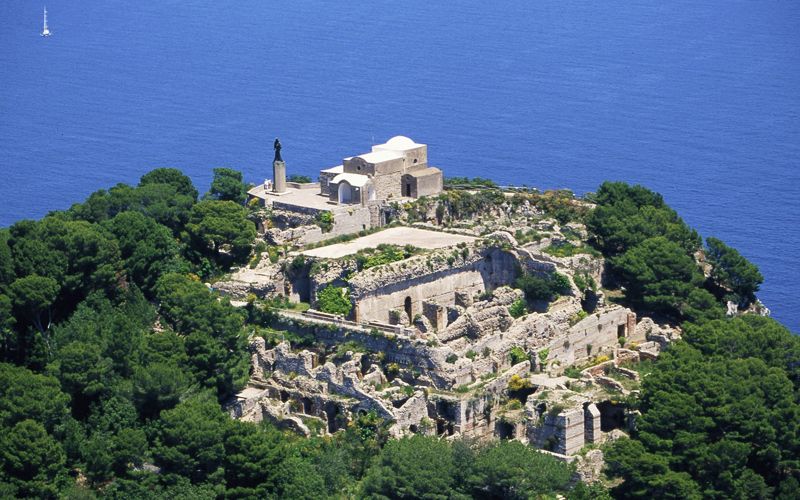
Villa Jovis is a historic and breathtaking archaeological site located on the island of Capri in Italy. This ancient Roman villa was built by Emperor Tiberius in the 1st century AD and served as his primary residence during his rule. Perched high atop a cliff overlooking the stunning Bay of Naples, Villa Jovis offers visitors a glimpse into the opulent lifestyle of one of Rome's most infamous emperors.
The villa itself is an impressive complex that covers over 7,000 square meters and includes a series of terraces, gardens, and living quarters. The layout of Villa Jovis is designed to take full advantage of its commanding position on the cliff, offering panoramic views of the surrounding landscape.
Visitors to Villa Jovis can explore the various rooms and chambers that make up the villa, including Tiberius' private apartments, dining halls, and even a series of underground passageways. The villa also features beautifully preserved frescoes and mosaics that provide insight into the artistic tastes of the time.
In addition to its architectural significance, Villa Jovis also holds historical importance as it was from this location that Tiberius ruled over the Roman Empire for much of his reign. The villa served as both a luxurious retreat for the emperor and a seat of power from which he could govern his vast empire.
For those interested in visiting Villa Jovis, there are several key points to keep in mind:
- The site is located at one end of Capri Island and can be reached by foot or by bus from Capri town.
- Entrance fees apply for visitors to access the archaeological site.
- Guided tours are available for those who wish to learn more about the history and significance of Villa Jovis.
- Visitors should wear comfortable shoes as there are steep inclines and stairs throughout the site.
Overall, Villa Jovis is a must-see destination for history buffs, architecture enthusiasts, and anyone looking to experience the beauty and grandeur of ancient Rome. With its stunning location overlooking the Bay of Naples and its rich historical significance, this archaeological site offers visitors a unique glimpse into one of Italy's most fascinating periods.