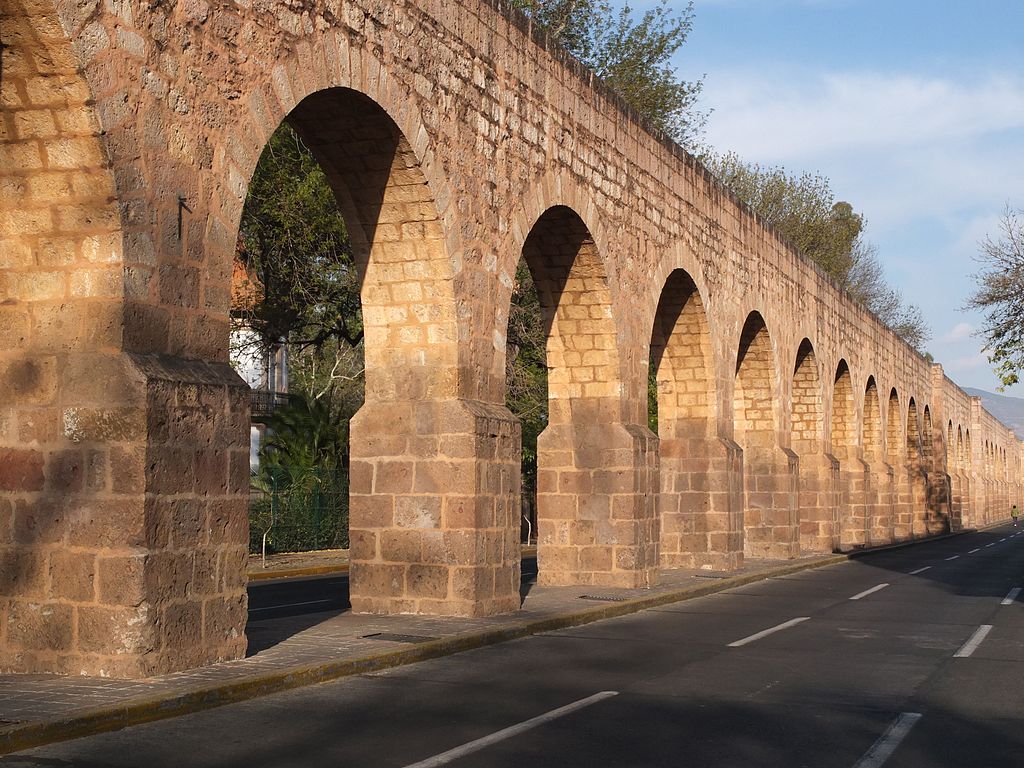
The Aqueduct in Morelia, Mexico is a stunning architectural marvel that has stood the test of time. Built in the 18th century, this aqueduct stretches over 1,700 feet and consists of 253 arches that soar high above the city streets. It was constructed to bring water from nearby springs to the city center, providing a vital resource for the growing population.
One of the most impressive features of the Aqueduct is its sheer size and scale. The arches stand at an average height of 30 feet and are made of pink stone quarried from nearby mountains. The precision with which these arches were constructed is truly remarkable, showcasing the skill and craftsmanship of the builders.
Visitors to Morelia can marvel at this historic structure by taking a leisurely stroll along Calzada Fray Antonio de San Miguel, where the Aqueduct runs parallel to the street. This vantage point offers a unique perspective on the grandeur of the aqueduct and allows visitors to appreciate its intricate design up close.
In addition to its architectural significance, the Aqueduct also serves as a symbol of Morelia's rich history and cultural heritage. It has become an iconic landmark in the city, attracting tourists from around the world who come to admire its beauty and learn about its historical importance.
For those interested in exploring more about this fascinating structure, here are some key facts about The Aqueduct in Morelia:
- Construction began in 1785 under orders from Viceroy MatÃas de Gálvez
- The aqueduct was completed in 1789 after four years of construction
- It originally spanned over six miles but only a portion remains standing today
- The aqueduct is considered one of Mexico's most important colonial-era engineering feats
Overall, The Aqueduct in Morelia is a must-see attraction for anyone visiting this historic city. Its impressive architecture, historical significance, and cultural importance make it a true gem of Mexican heritage. So be sure to add it to your itinerary when exploring Morelia!