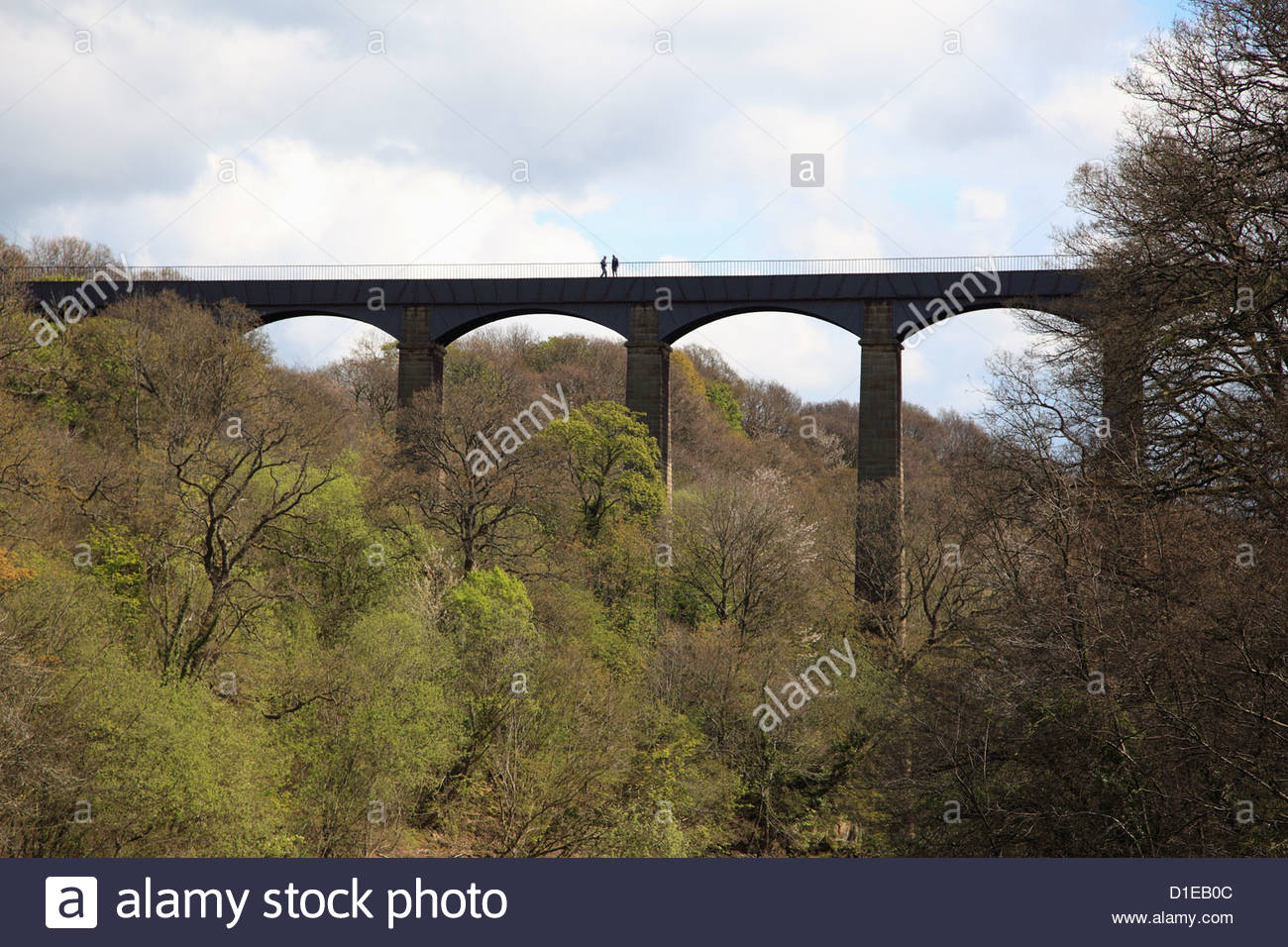
Pontcysyllte Aqueduct is a remarkable feat of engineering located in Llangollen, Wales. This aqueduct was completed in 1805 and was designed by Thomas Telford to carry the Llangollen Canal over the River Dee. It is considered to be one of the most impressive examples of canal engineering in the world and has been designated as a UNESCO World Heritage Site.
The aqueduct is made up of a cast iron trough supported by 18 stone pillars, which span a length of 307 meters and stand at a height of 38 meters above the river below. The structure is an incredible sight to behold, with its graceful arches and stunning views of the surrounding countryside.
Visitors to Pontcysyllte Aqueduct can take a leisurely stroll along the towpath or even hire a narrowboat to travel across the aqueduct itself. The experience offers a unique perspective on both the engineering marvel of the aqueduct and the natural beauty of the River Dee valley.
Here are some key facts about Pontcysyllte Aqueduct:
- The aqueduct was built using local limestone and cast iron, materials that have stood the test of time.
- It took ten years to construct Pontcysyllte Aqueduct, with work beginning in 1795 and completing in 1805.
- The aqueduct is still in use today, carrying boats along the Llangollen Canal as it has done for over two centuries.
- Pontcysyllte Aqueduct is part of a larger network of canals known as the Shropshire Union Canal system.
In conclusion, Pontcysyllte Aqueduct is not only an important piece of industrial heritage but also a stunning example of architectural ingenuity. Its combination of form and function continues to captivate visitors from around the world, making it a must-see destination for anyone visiting Wales.