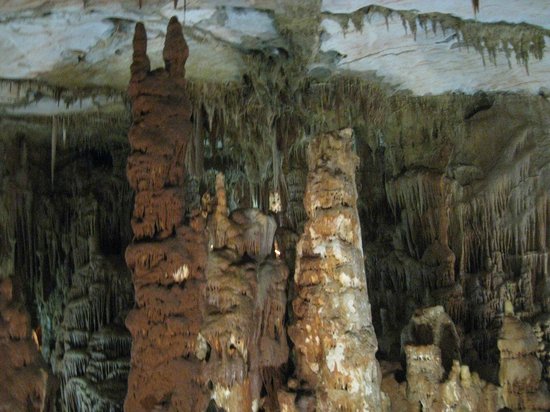
Petralona Cave is a fascinating site located in the Halkidiki region of Greece. This unique cave has a rich history and is known for its significant archaeological findings. Here is a closer look at the Petralona Cave and its significance:
- The Petralona Cave was discovered in 1959 by a local shepherd named Philippos Hatzaridis. The cave is situated at an altitude of 300 meters on the western foot of Mount Katsika.
- The cave is estimated to be about 700,000 years old and has served as an important archaeological site for researchers studying human evolution.
- One of the most significant findings in the Petralona Cave is the skull of a hominin known as Archanthropus europaeus petraloniensis, which is believed to be around 700,000 years old. This discovery has provided valuable insights into the evolutionary history of humans in Europe.
- The cave is also home to impressive stalagmites and stalactites, as well as underground lakes and rivers. Visitors to the cave can explore these formations and learn about the geology of the area.
- The Petralona Cave is open to the public, and guided tours are available for visitors interested in learning more about the history and significance of the site.
- In addition to its archaeological and geological importance, the cave is also a protected natural monument, providing a habitat for a variety of unique flora and fauna.
Overall, the Petralona Cave is a must-visit destination for anyone interested in history, archaeology, or geology. Its rich history and significant findings make it a truly remarkable site to explore in the Halkidiki region of Greece.