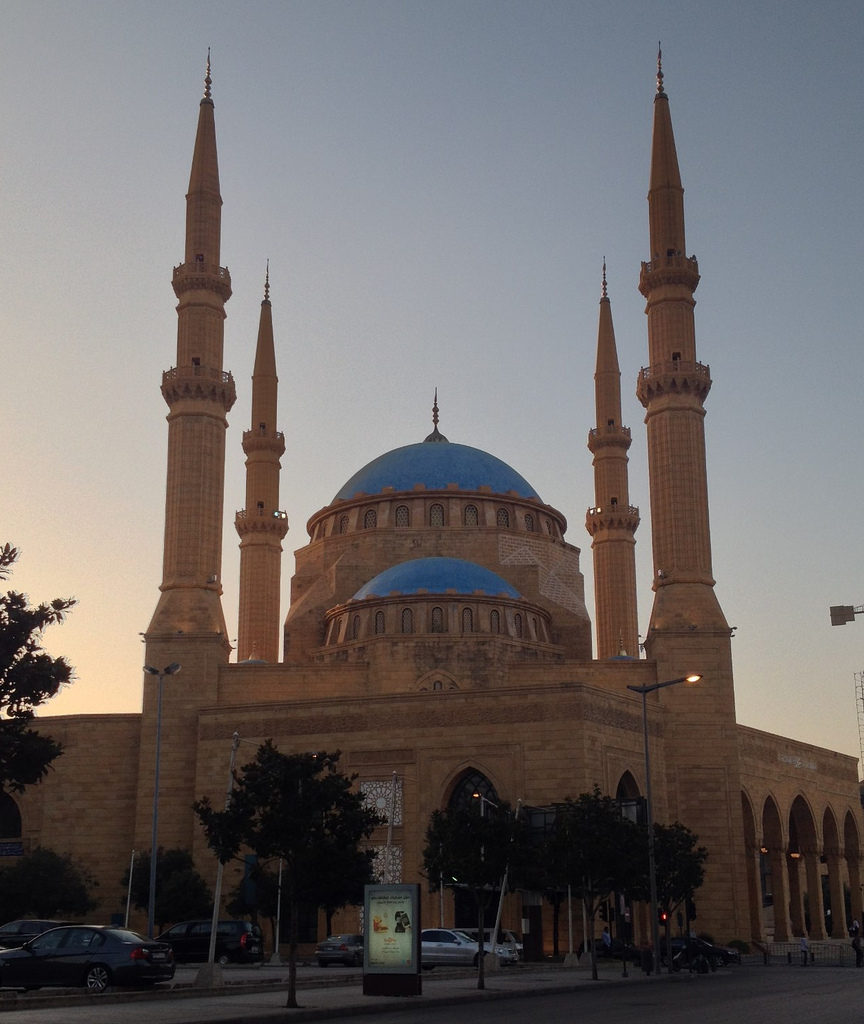
In the 19th century, a Zawiya (prayer corner) named after Sheikh Abu Nasr al-Yafi was built on this site. Souk Abu Nasr was located in the same area and was operational, with the Zawiya, until 1975. Following earlier efforts by Beiruti families, the Mohammad Al-Amin Association was created in the 1950s in order to replace the Zawiya with a mosque, in the name of the Prophet Mohammad, and acquire more land. The project never materialized. It took decades of preparation to obtain sufficient land adjacent to the old Zawiya to build the new mosque. Following a donation by late Prime Minister Rafik Hariri, the foundation stone for the Mohammad Al-Amin Mosque was laid in November 2002. With its built area covering approximately 11,000 square meters, its 48-meter-high blue dome and 65-meter-high minarets, the mosque has become a dominant feature of the Beirut City Center skyline. Inaugurated in 2008, its design is evocative of the Ottomans? monumental architecture. During the construction of the mosque on this corner of Martyrs? Square, archaeologists uncovered a large section of the east-west main Roman street (Decumanus Maximus), with paving and columns.