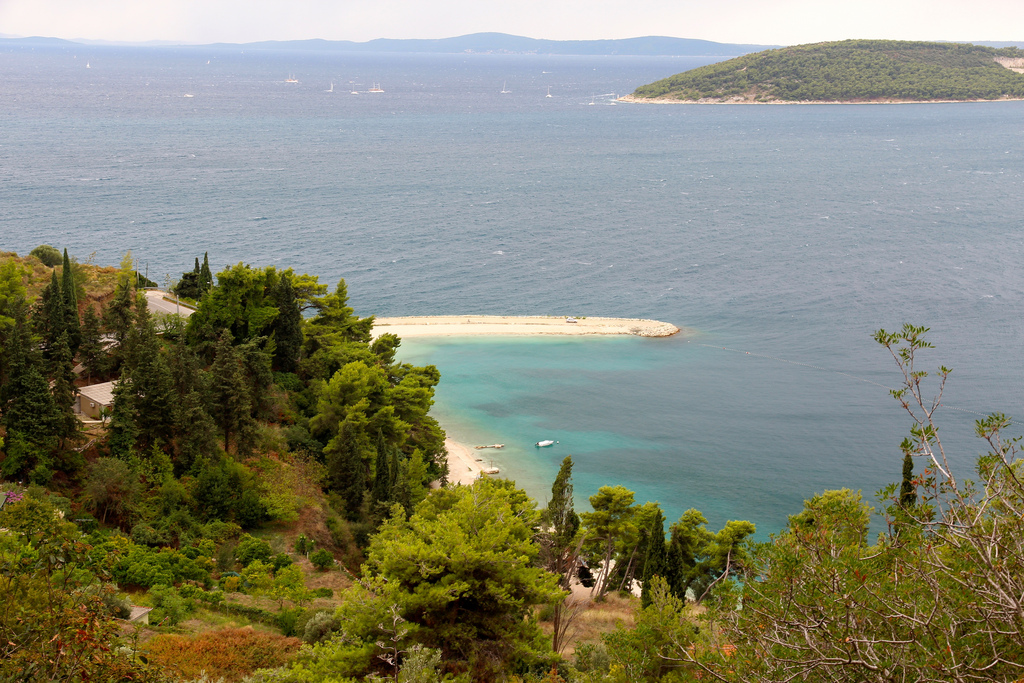
During the Second World War, Marjan was the subject of a popular Partisan song "Marjane, Marjane", sung by the Split (and Dalmatian) members of that anti-fascist movement and was reportedly a favorite song of resistance leader and future president of the new SFR Yugoslavia, Josip Broz Tito. Indeed, the flamboyant Partisan leader was so fond of the hill itself, he chose it as the site for the summer residence of the Yugoslav president, the Vila Dalmacija. In the 1950s, during the period of the second Yugoslavia, the Federal Government, in conjunction with local Split authorities, undertook a massive project for the transformation of the entire wild hill into a forest park. The hill was intensively forested (large parts of it were barren until then), many recreational facilities were built, including jogging tracks, a road system encircling the peninsula, a maritime research institute, the Split City Zoo (now fallen into disrepair), botanical garden (recently abandoned) and a water pipeline reaching all the way to the top of the hill. The authorities also constructed the city weather station and two "vidilice", or "look-out points", as resting places connected with a long stairway all the way to the Diocletian's Palace, the "Riva" promenade and the rest of the city center.