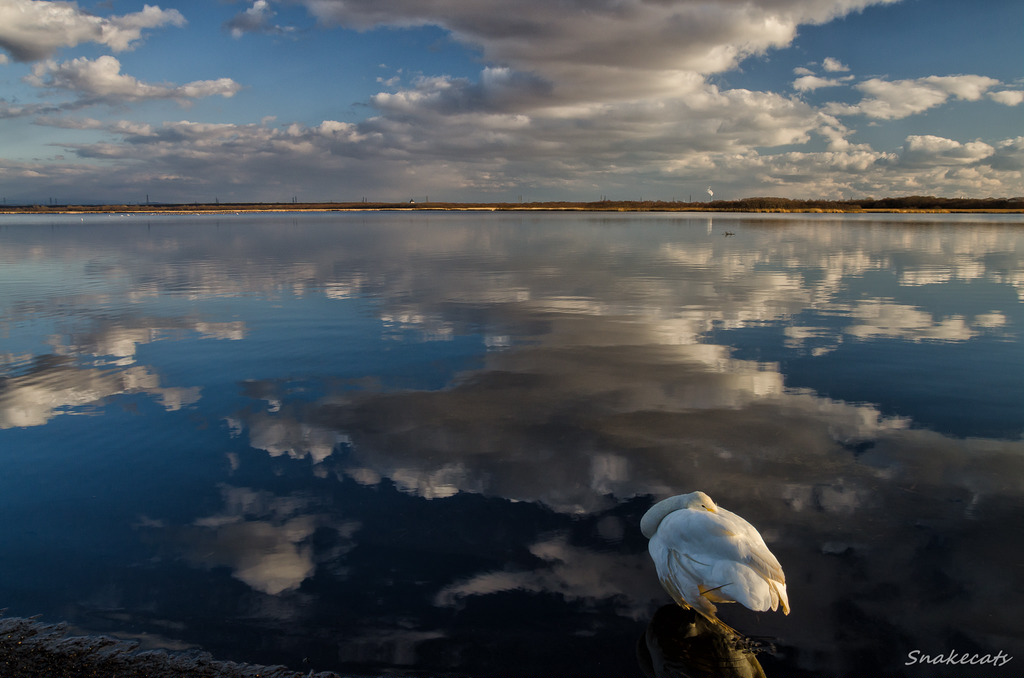
Since then, the rangers have always stayed there and put efforts on surveys around Lake Utonai-ko, management of its environment and environmental education. Representative natural habitats of the sanctuary are secondary forests of Quercus crispula, Alnus japonica and Magnolia praecocissima var. borealis, grasslands where Eastern Marsh Harrier and Yellow-breasted Bunting occur, watershed area of the Bibi-gawa river which flows in the lake, and Lake Utonai-ko to which waterfowl and swans migrate. Although there was once a plan to build the Chitose-gawa river drainage canal connecting with the Bibi-gawa river, and industrial development in central Hokkaido had powerfully proceeded this, the Bibi-gawa river has remained as a miraculously preserved primary river. Natural environment around Lake Utonai-ko as described above is highly evaluated internationally as well.