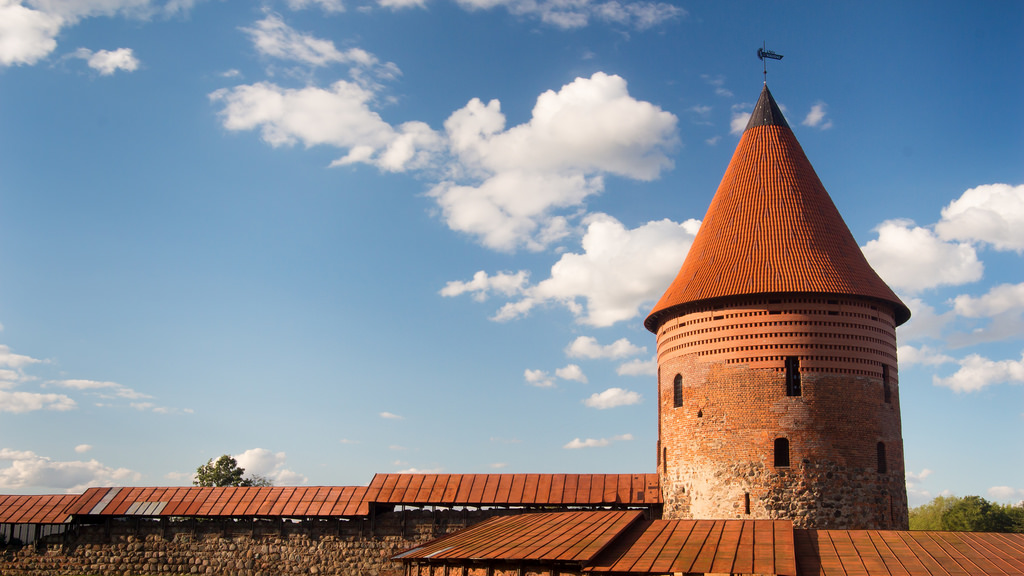
On the second half of the 16th century Kaunas Castle was strengthened again as in the inside yard there was a wooden gallery fitted for rifles, who already used gunpowder technologies, built. But as soon as these technologies were invented, the castle lost its` defensive importance as even high and thick walls could not resist forces of explosion so the castle became a residence of Lithuanian dukes. In 1549 the Kaunas Castle was given to famous Lithuanian noblewoman Barbora Radvilait? who beautifully rearranged it. In the end of 17th century some parts of the castle were destroyed by waters of Neris river. Despite that, Kaunas Castle was used for military purposes by Russian and Sweden armies in the same century. That was the last time when Kaunas Castle served for war. When Napoleon army entered Lithuania it was the last time when Kaunas Castle was devastated. In 1930 archeological researches and conservational works in the Kaunas Castle were started. The South eastern tower of the castle was restored and fitted to use of Vytautas the Great War museum which nowadays is not located in the castle anymore as the exposition was returned to the War museum in the 9th decade.