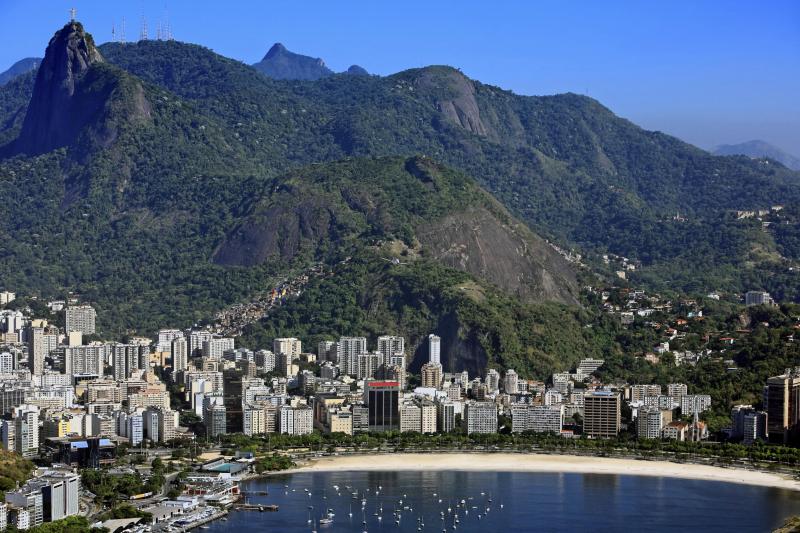
Guanabara Bay is a picturesque natural bay located in Rio de Janeiro, Brazil. This stunning body of water is surrounded by lush green mountains and is home to several iconic landmarks, including the Sugarloaf Mountain and the Christ the Redeemer statue.
The bay covers an area of around 400 square kilometers and is one of the largest bays in the world. It is famous for its crystal-clear waters and is a popular spot for water sports enthusiasts, including sailors, windsurfers, and kite surfers.
One of the most notable features of Guanabara Bay is the numerous islands that dot its waters. These islands are home to diverse ecosystems, including tropical forests and mangrove swamps, making them a haven for wildlife. Some of the most well-known islands in the bay include Governor's Island, Fundão Island, and Snakes Island.
Guanabara Bay is not only a beautiful natural attraction but also plays a vital role in the economy of Rio de Janeiro. The bay serves as a major port for the city, handling a large volume of cargo and passenger traffic. It is also a key transportation route, connecting Rio de Janeiro to other parts of Brazil and the world.
However, in recent years, Guanabara Bay has faced challenges due to pollution and environmental degradation. The bay has been heavily impacted by industrial runoff, sewage discharge, and urban development, leading to concerns about water quality and marine life in the area.
Efforts are being made to address these environmental issues and protect Guanabara Bay for future generations. The government of Rio de Janeiro has implemented conservation measures, such as sewage treatment plants and pollution control programs, to improve the health of the bay.
Despite its challenges, Guanabara Bay remains a stunning natural wonder and an essential part of Rio de Janeiro's identity. Visitors to the city can enjoy the beauty of the bay while also learning about the importance of preserving this valuable ecosystem for years to come.
Some key points about Guanabara Bay include:
- It is one of the largest bays in the world, covering an area of around 400 square kilometers.
- The bay is surrounded by picturesque mountains and is home to iconic landmarks like Sugarloaf Mountain and Christ the Redeemer.
- Guanabara Bay is a popular spot for water sports enthusiasts, including sailors, windsurfers, and kite surfers.
- The bay is home to numerous islands, each with its own unique ecosystems and wildlife.
- Guanabara Bay plays a vital role in the economy of Rio de Janeiro, serving as a major port and transportation route.
- Efforts are being made to address pollution and environmental degradation in the bay to preserve its beauty and biodiversity.