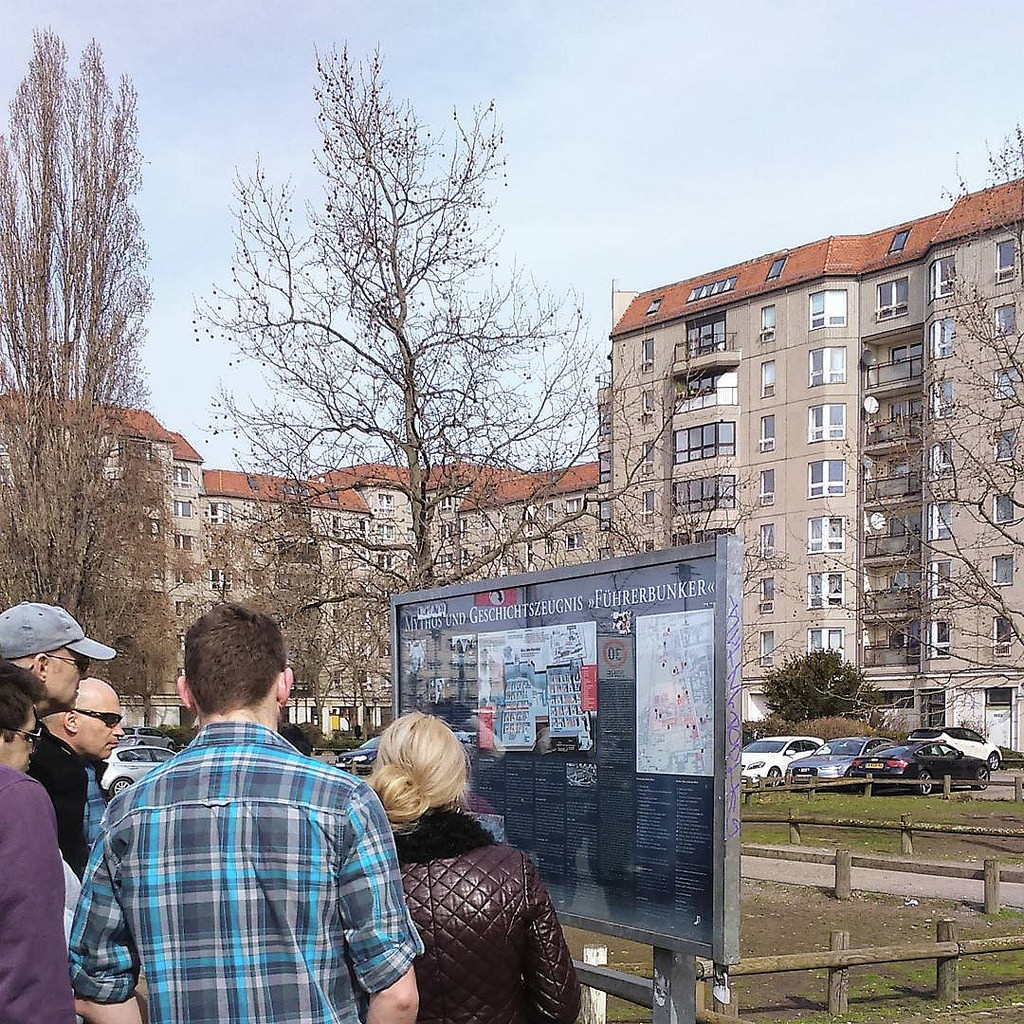
The Fuhrerbunker in Berlin, Germany holds a significant place in history as the underground bunker where Adolf Hitler spent his final days during World War II. Located beneath the Reich Chancellery in central Berlin, the Fuhrerbunker was constructed in 1944 as a reinforced concrete shelter to protect Hitler and his inner circle from Allied bombing raids.
The bunker consisted of several levels, with living quarters, offices, conference rooms, and even a small hospital. It was designed to withstand heavy bombardment and had its own ventilation system and emergency exits. Despite its sturdy construction, the Fuhrerbunker could not protect Hitler from the advancing Soviet forces who were closing in on Berlin in April 1945.
As the situation grew increasingly dire for Nazi Germany, Hitler retreated to the Fuhrerbunker with his closest advisors and staff. It was here that he made his final decisions and ultimately took his own life on April 30th, 1945. The bunker was also the site of other tragic events during those last days of the war, including the suicides of Joseph Goebbels and his wife Magda.
Today, visitors can tour what remains of the Fuhrerbunker as part of a guided tour through Berlin's underground history. While much of the original structure has been destroyed or sealed off since the end of World War II, there are still sections that have been preserved for historical purposes.
Some key points to note about the Fuhrerbunker include:
- The bunker was approximately 8 meters below ground level
- It had over 30 rooms spread across two levels
- The walls were up to four meters thick
- The bunker could accommodate up to 2,000 people
Visiting the Fuhrerbunker offers a sobering glimpse into one of the darkest chapters of human history. It serves as a reminder of the consequences of unchecked power and ideology run amok. As we reflect on this somber past, we must strive to learn from it so that such atrocities may never be repeated again.
In conclusion, while it may be difficult to confront such painful memories, places like the Fuhrerbunker serve as important reminders of our shared history. By acknowledging these dark moments and learning from them, we can work towards building a more peaceful and just future for all.