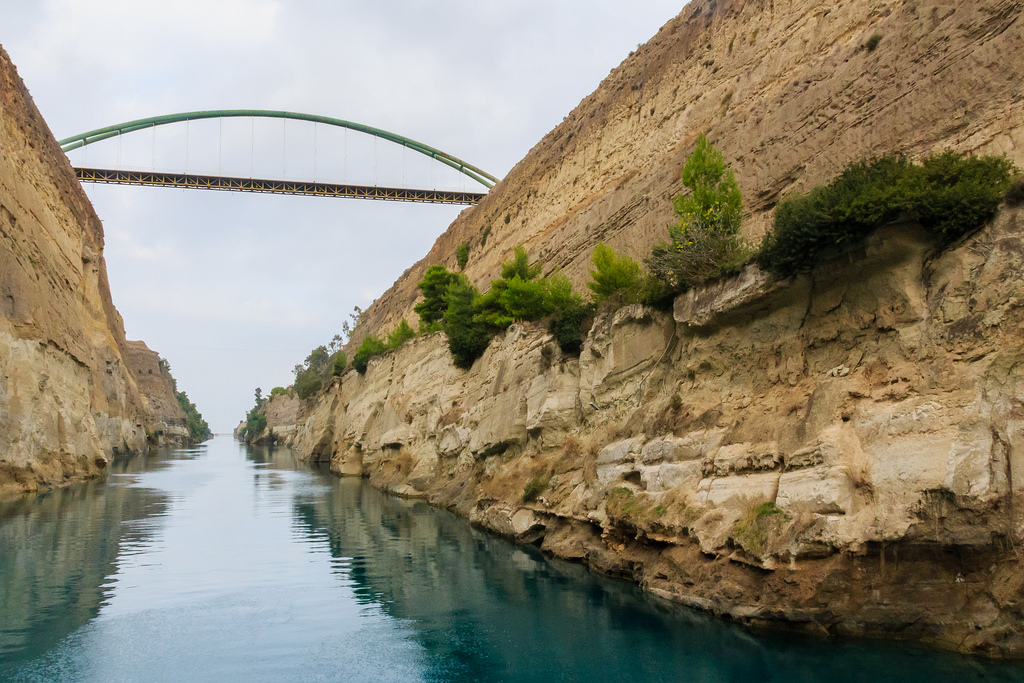
The Corinth Canal in Greece is a marvel of engineering that has captivated visitors for centuries. This narrow waterway cuts through the Isthmus of Corinth, connecting the Gulf of Corinth with the Saronic Gulf in the Aegean Sea. The canal is approximately 6.4 kilometers long and only 21 meters wide, making it one of the most narrow canals in the world.
Construction on the Corinth Canal began in 1881 and was completed in 1893 after numerous delays and setbacks. The canal was originally proposed by ancient Greek rulers as early as the 7th century BC, but it wasn't until modern times that technology allowed for its construction. Today, the Corinth Canal is a popular tourist attraction, drawing visitors from around the world to witness its impressive feat of engineering.
Here are some key facts about the Corinth Canal:
- The canal cuts through solid rock at depths reaching up to 79 meters.
- It is primarily used by small ships and pleasure craft due to its narrow width.
- The canal saves ships traveling between the Adriatic and Aegean Seas over 400 kilometers compared to sailing around the Peloponnese peninsula.
- Bungee jumping is a popular activity at the canal, with thrill-seekers leaping from a bridge over its waters.
Visitors to Corinth can take a boat tour along the canal or simply admire it from one of several viewpoints along its banks. The sheer cliffs that line the canal offer stunning views and make for great photo opportunities. Additionally, there are several cafes and restaurants nearby where visitors can relax and enjoy a meal while taking in this incredible feat of engineering.
In conclusion, the Corinth Canal is a must-see destination for anyone visiting Greece. Its historical significance, impressive engineering, and breathtaking views make it a truly unique experience. Whether you're interested in history, architecture, or simply want to witness something awe-inspiring, be sure to add the Corinth Canal to your travel itinerary.