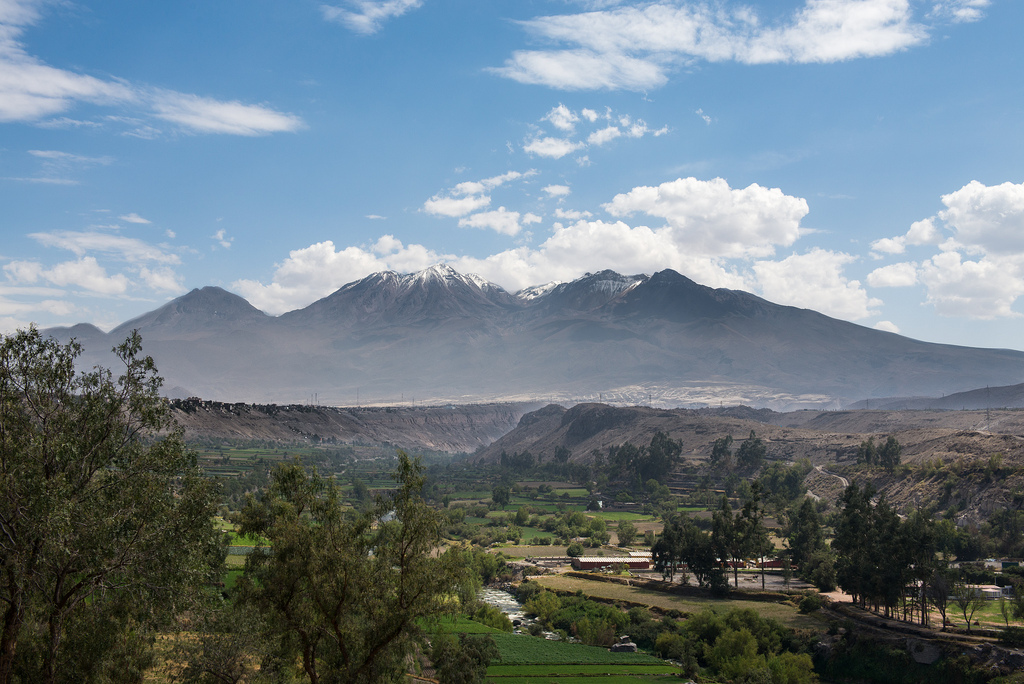
Later activity generated basaltic lava flows on Chachani's southwest side, in valleys eroded in the tuffs. There, the 1,200 metres (3,900 ft) high Pampa de Palacio/Las Cortaderas lava domes were formed by highly viscous andesitic lavas. They are well preserved, indicating a young age. It is believed the end of Chachani's eruptive activity happened simultaneously or closely preceded the start of activity of El Misti.[1][3] Some thin lava flows from the central and western parts of the volcano run above moraines. The Cerro La Horqueta cinder cone may be the youngest vent of Chachani.[1] Between 70,000 and 50,000 years ago ashfall deposits from El Misti were deposited on Chachani's southeastern flank.[10] A 270,000 ± 80,000 year old dacitic lava flow on Chachani's eastern flank is more likely to come from Chachani than El Misti, as are ash fall deposits found on top of this lava (which is thus older) and covering Chachani's flanks.[11] Geothermal activity is found today at Chachani,[12] and solfataras were observed in 2012 in the summit area.[6]