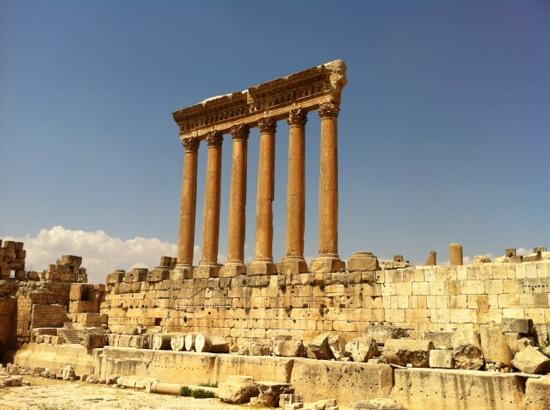
Baalbek Temple, located in the town of Baalbek in Lebanon, is one of the most impressive ancient Roman sites in the world. This UNESCO World Heritage site is known for its massive stone blocks and intricate carvings that showcase the architectural prowess of the Romans.
The temple complex is dedicated to the Phoenician god Baal, who was later assimilated into the Roman pantheon as Jupiter. The main temples at Baalbek are the Temple of Jupiter, the Temple of Bacchus, and the Temple of Venus. These temples were built between 1st century BC and 3rd century AD during the reign of Roman emperors such as Augustus and Hadrian.
One of the most striking features of Baalbek Temple is its enormous stone blocks, some weighing over 800 tons. These stones were quarried from nearby mountains and transported to Baalbek using a sophisticated system of ramps and pulleys. The precision with which these stones were cut and placed together is a testament to the engineering skills of the Romans.
Visitors to Baalbek Temple can explore its various structures, including courtyards, colonnades, and sanctuaries. The intricate carvings on the walls depict scenes from Roman mythology and religious rituals. The temple complex also offers stunning views of the surrounding countryside.
In addition to exploring the temples themselves, visitors can also learn about the history of Baalbek at an on-site museum. The museum houses artifacts found during excavations at Baalbek, including statues, pottery, and inscriptions that provide insight into daily life in ancient times.
For those interested in visiting Baalbek Temple, here are some tips:
- Wear comfortable shoes as you will be doing a lot of walking on uneven terrain.
- Bring plenty of water as it can get hot during summer months.
- Consider hiring a guide to learn more about the history and significance of each structure.
- Plan your visit during off-peak hours to avoid crowds.
Overall, a visit to Baalbek Temple is a must for anyone interested in ancient history or architecture. Its impressive size and intricate design make it one of Lebanon's most iconic landmarks that should not be missed.