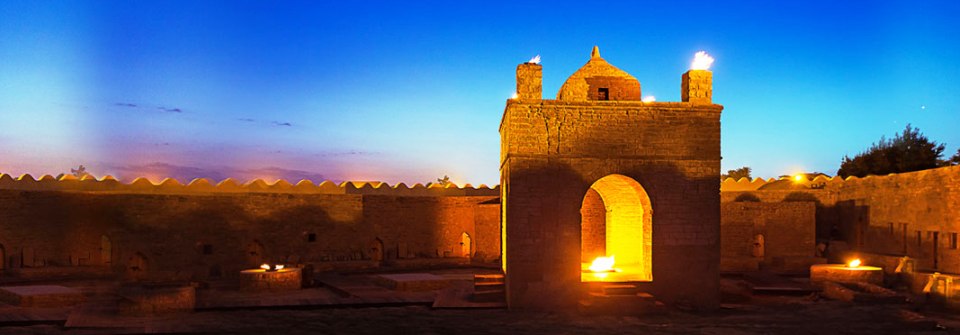
The inscriptions in the temple in Sanskrit (in Nagari Devanagari script) and Punjabi (in Gurmukhi script) identify the site as a place of Hindu and Sikh worship,[8][18] and state it was built and consecrated for Jwala Ji,[8] the modern Hindu fire deity. Jwala (?????/??????) means flame in Sanskrit (c.f. Indo-European cognates: proto-Indo-European guelh, English: glow, Lithuanian: zvilti)[52] and Ji is an honorific used in the Indian subcontinent. There is a famed shrine to Jwala Ji in the Himalayas, in the settlement of Jawalamukhi, in the Kangra district of Himachal Pradesh, India to which the Atashgah bears strong resemblance and on which some scholars (such as A. V. Williams Jackson) suggested the current structure may have been modeled.[8] However, other scholars have stated that some Jwala Ji devotees used to refer to the Kangra shrine as the 'smaller Jwala Ji' and the Baku shrine as the 'greater Jwala Ji'.[18] Other deities mentioned in the inscriptions include Ganesha and Shiva. The Punjabi language inscriptions are quotations from the Adi Granth, while some of the Sanskrit ones are drawn from the Sat Sri Ganesaya namah text.[8]