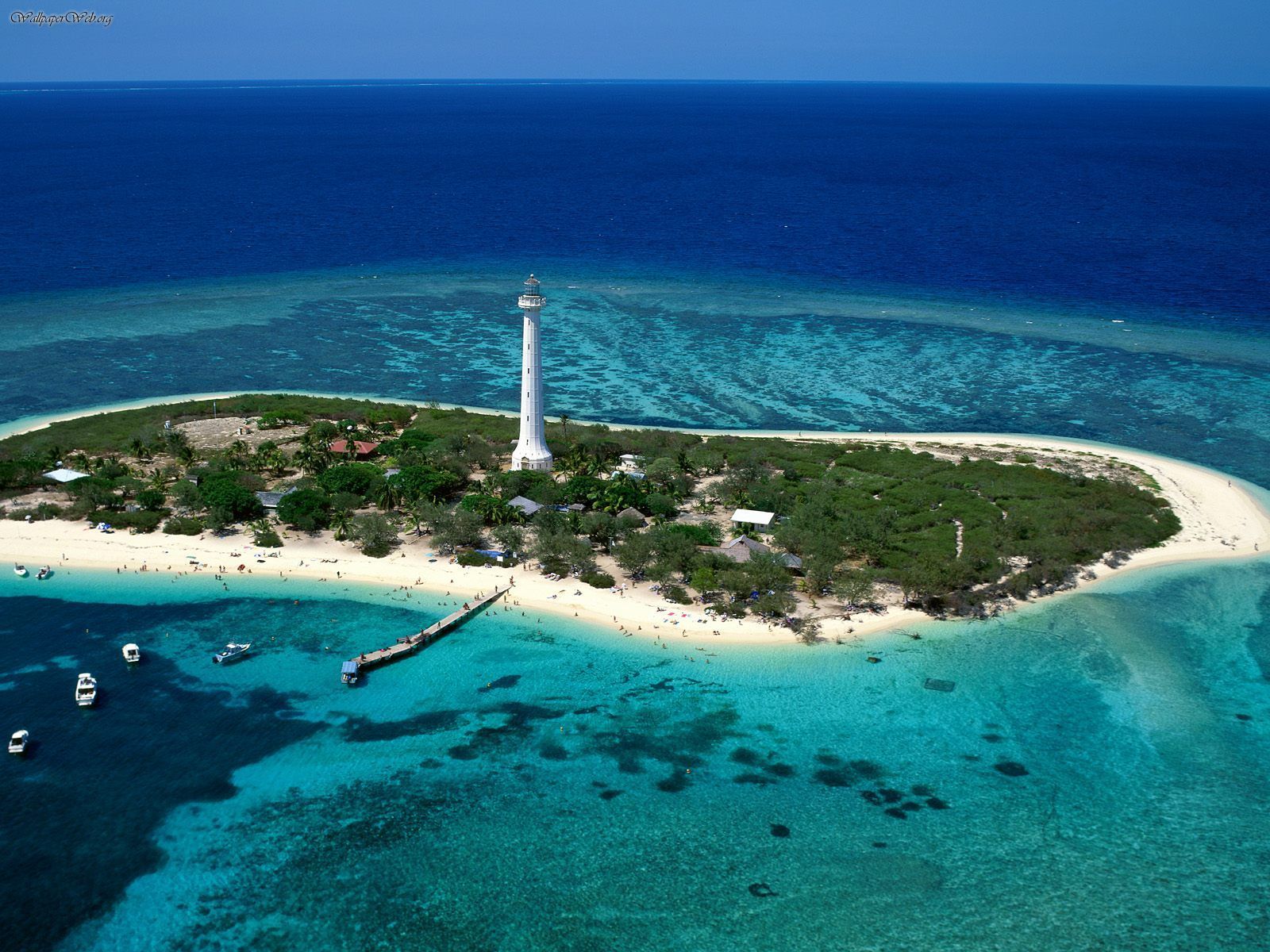
The metal components were made by Rigolet in North-East Paris in 1862 and the tower was constructed in Paris as a demonstration.[2] It was then disassembled into pieces weighing a total of 387,953 kilos and transported along the River Seine to the port of Le Havre for its voyage to New Caledonia. At 56 metres tall (247 steps), it is one of the tallest lighthouses in the world[3] and it was the first metallic lighthouse constructed in France. The foundation stone was laid on 18 January 1865 and it was first lit on 15 November 1865, the saint day of the Empress Eugénie, wife of Napoleon III.[4] Its light signals the entrance to the passage of Boulari, one of only three natural passages in the reef surrounding New Caledonia. On the other side of the world, the Roches-Douvres Light in the English Channel is the twin brother of the Amédée lighthouse.[2] It is now a very popular tourist attraction.