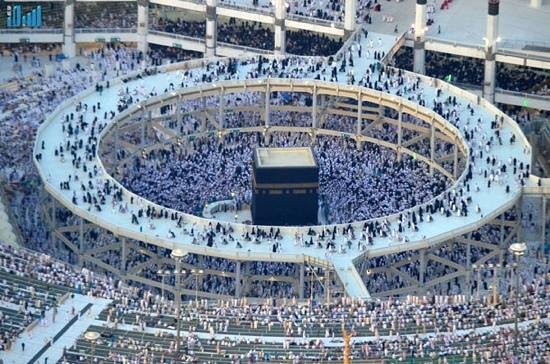
The Al Haram in Medina, located in the heart of the Middle East, holds tremendous significance for Muslims around the world. It is considered one of the holiest sites in Islam, drawing millions of devout followers each year to offer prayers and seek blessings. This article delves into the historical and spiritual importance of Al Haram in Medina, Asia, and the Middle East.
Located in the city of Medina in Saudi Arabia, Al Haram holds a special place in Islamic history. It is the site where the Prophet Muhammad migrated from Mecca, an event known as the Hijrah, and established the first Islamic state. The mosque within Al Haram is called Al-Masjid an-Nabawi, which translates to "The Prophet's Mosque." It is the second holiest site in Islam, after the Masjid al-Haram in Mecca.
Al Haram is not just a religious site but also a center for knowledge and learning. The historic significance of this holy site is highlighted by the fact that it was the venue for the Prophet Muhammad's sermons, teachings, and the revelation of the Holy Quran. It remains a revered place, where Muslims can immerse themselves in the teachings of Islam and connect with their faith on a deeper level.
The magnificence of Al Haram is immediately evident upon entering its premises. The architecture of the mosque showcases a harmonious blend of traditional Islamic design and modern elements. The prayer hall is adorned with intricate decorations and features a vast courtyard, allowing for congregational prayers. The interior houses the famous Green Dome, under which lies the tomb of the Prophet Muhammad.
Visitors to Al Haram can explore various sections within the mosque complex. These include the Riyad al-Jannah, also known as the Garden of Paradise, which is believed to be a section of Paradise. It is said that prayers offered in this area are highly rewarded. Pilgrims can also visit the Rawdah, an area between the Prophet's pulpit and his grave, which is regarded as one of the most sacred spots in the entire mosque.
Apart from its spiritual significance, Al Haram has immense cultural and historical value. The mosque has undergone several expansions over the centuries to accommodate the growing number of worshippers. It has become an architectural marvel, combining the rich traditions of Islamic architecture with modern engineering techniques. The ongoing expansion projects aim to accommodate an increasing number of pilgrims while preserving the essence and integrity of the site.
In order to accommodate the influx of worshippers, Al Haram operates a comprehensive system to manage the prayers and rituals. The mosque is divided into different sections, such as the main prayer hall and the women's prayer area, to ensure an organized and peaceful experience for all visitors. The Saudi government also enforces strict regulations to maintain the cleanliness, safety, and sanctity of the site.
In conclusion, Al Haram in Medina, Asia, and the Middle East is a sacred site that holds deep religious, cultural, and historical significance in Islam. The mosque complex not only provides a spiritual haven for Muslims but also serves as a symbol of unity and devotion. Its grandeur, rich history, and the ability to accommodate millions of pilgrims make it a remarkable place for Muslims to connect with their faith and seek solace.